← Back
Case Study · 2025

Millenium: making network control visible at infrastructure scale.

A Federal Reserve audit exposed unreliable inventory controls across a global network estate. I turned the fix into a platform — built around trusted asset state, governed lifecycle, safer automation, and executive visibility.

Millenium executive control dashboard

The problem

At financial-infrastructure scale, bad inventory becomes control risk.

The estate supported $100B in daily transaction notional. Stale DNS records, conflicting IP allocations, and fragmented device state were not just admin mess — they affected change safety, incident response, audit posture, and automation. The audit gave a deadline. I used it as a reason to build something that would last.

A Federal Reserve audit became the reason to build something properly
The estate supported $100B in daily transaction notional
99.9% uptime, lifecycle controls, and disaster-recovery readiness in production
Immediate risks
  • Mis-scoped change windows when device identity is unreliable.
  • Slower incident containment when ownership and state are fragmented.
  • Unknown or stale devices creating lateral-movement exposure.
  • Unsafe automation when network state is inconsistent across systems.

How I positioned it

Each screen frames the product around a single outcome the buyer cares about. No feature lists, no dense walkthroughs.

1/5 · Positioning

Single source of truth

Millenium executive control dashboard

Product interface

Screenshots from the actual interface. Strong hierarchy, restrained colour, explicit workflow cues — so technical detail stays readable under real operational conditions.

Executive dashboard

Concise signals, not dense enterprise clutter.

I wanted the dashboard to compress a massive estate into a few decisive metrics: total assets, lifecycle verification, monitoring coverage, and critical exceptions. If an executive can't understand the posture in ten seconds, the dashboard has failed.
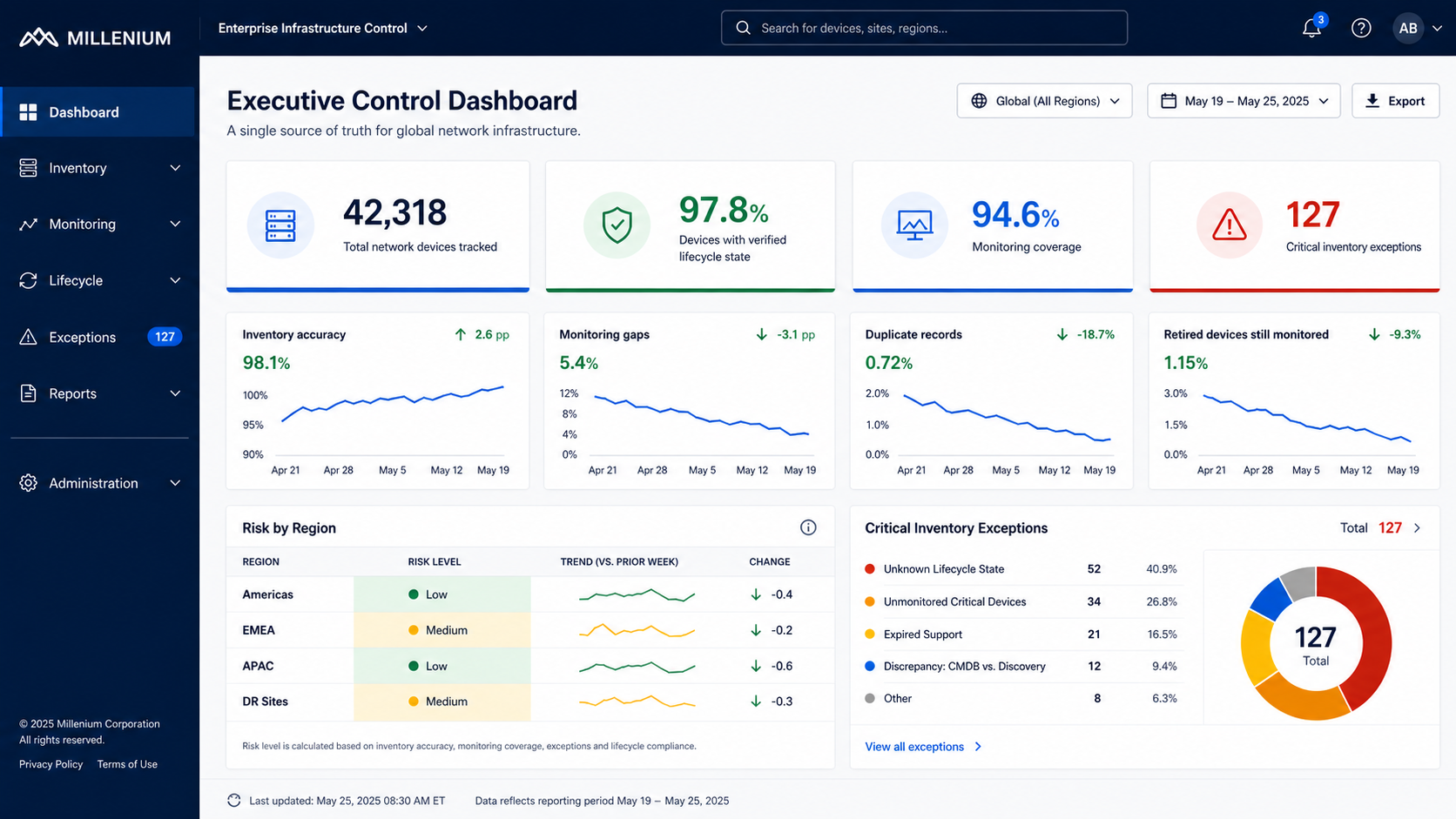
Millenium executive control dashboard UI
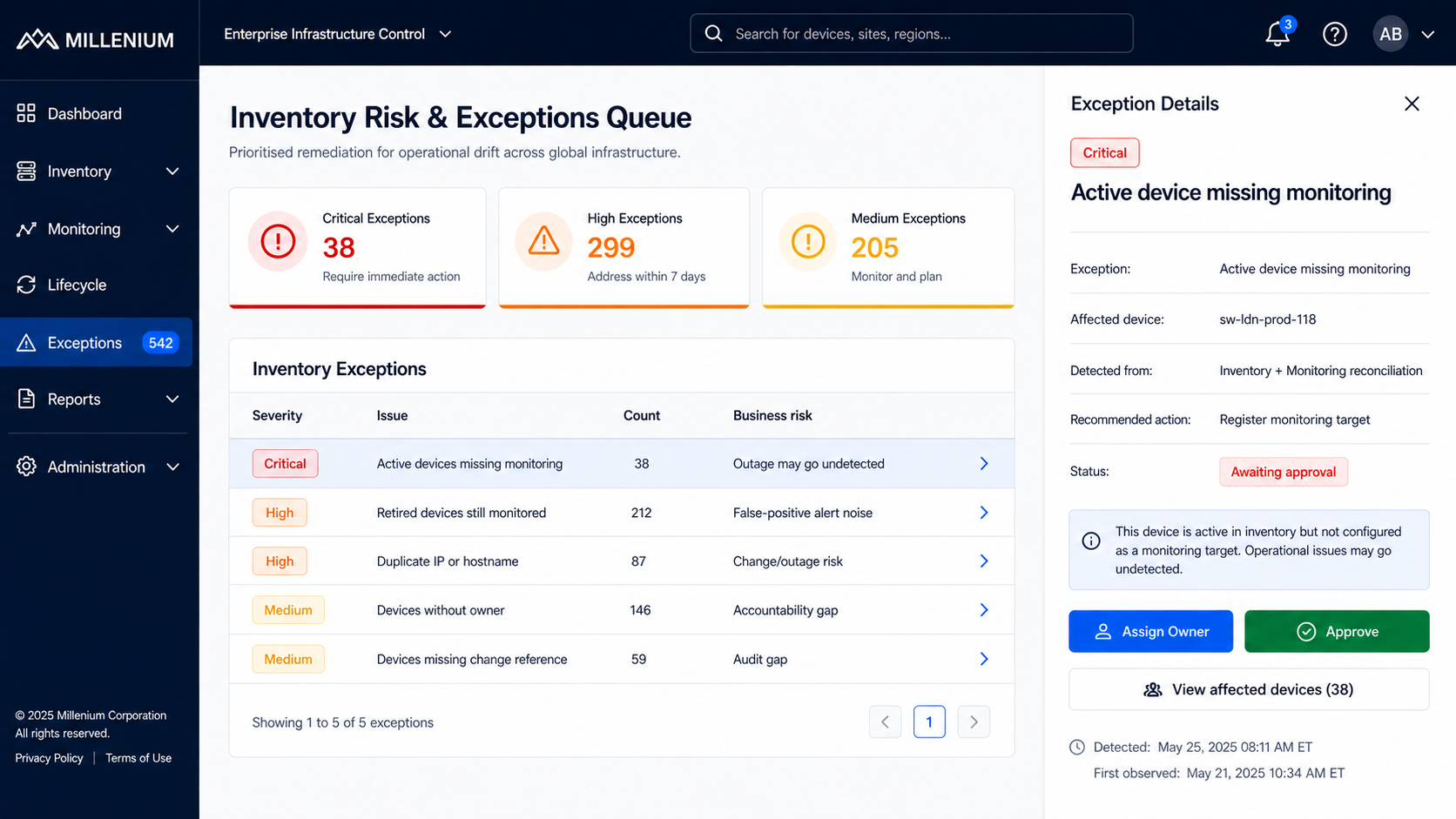
Exceptions workflow

Triage and accountability in one flow.

Severity, count, business risk, and next action all live together. The side panel gives context without forcing a full page change. I spent time making sure the triage flow felt like a single, coherent decision rather than a series of disconnected screens.

Millenium inventory risk and exceptions queue
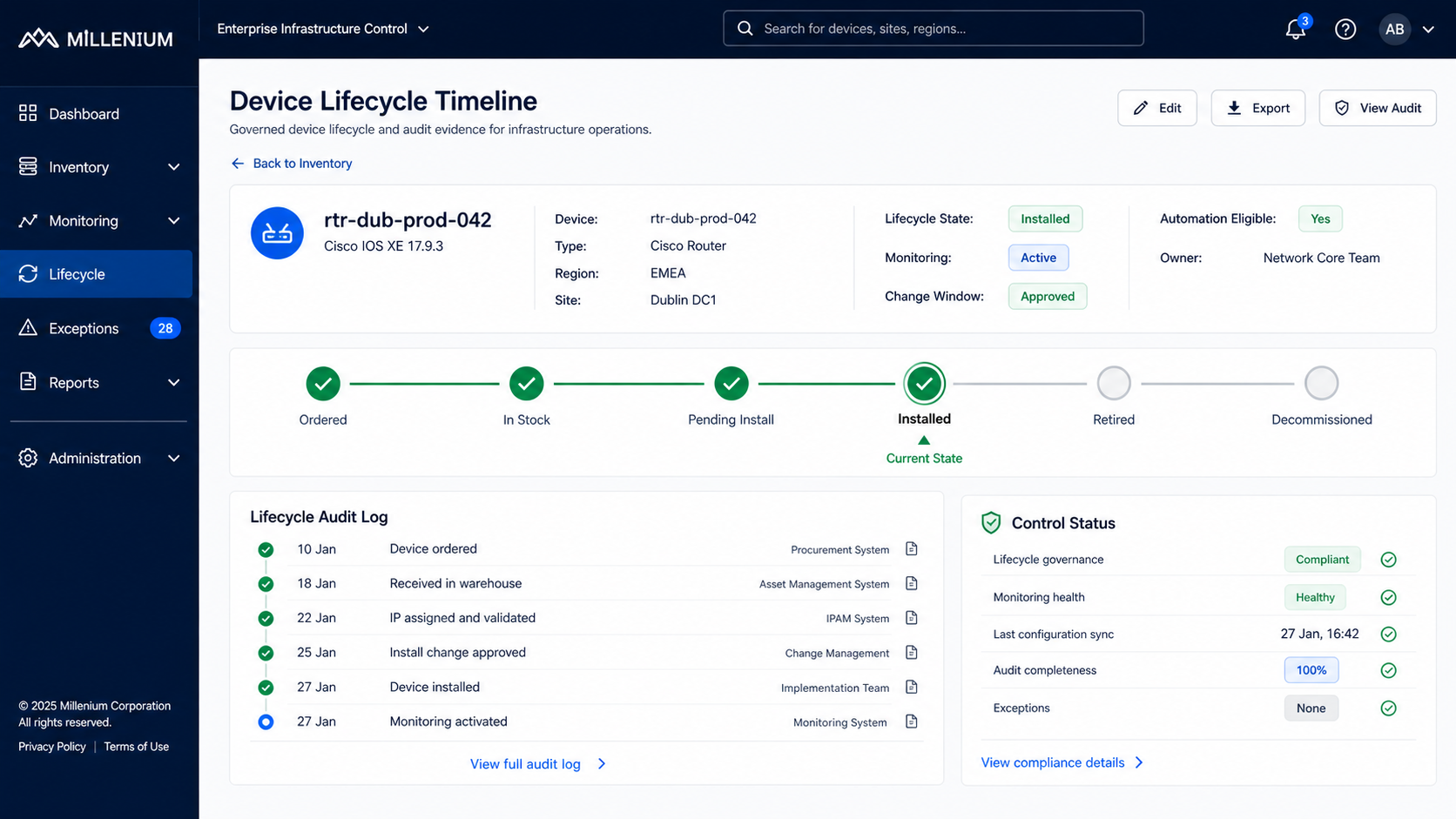
Lifecycle view

Auditability made legible.

Complex asset history turned into a readable timeline of state transitions — supporting events, ownership, and control status. If someone asks 'what happened to this device and when?', the answer should be immediate.

Millenium device lifecycle timeline
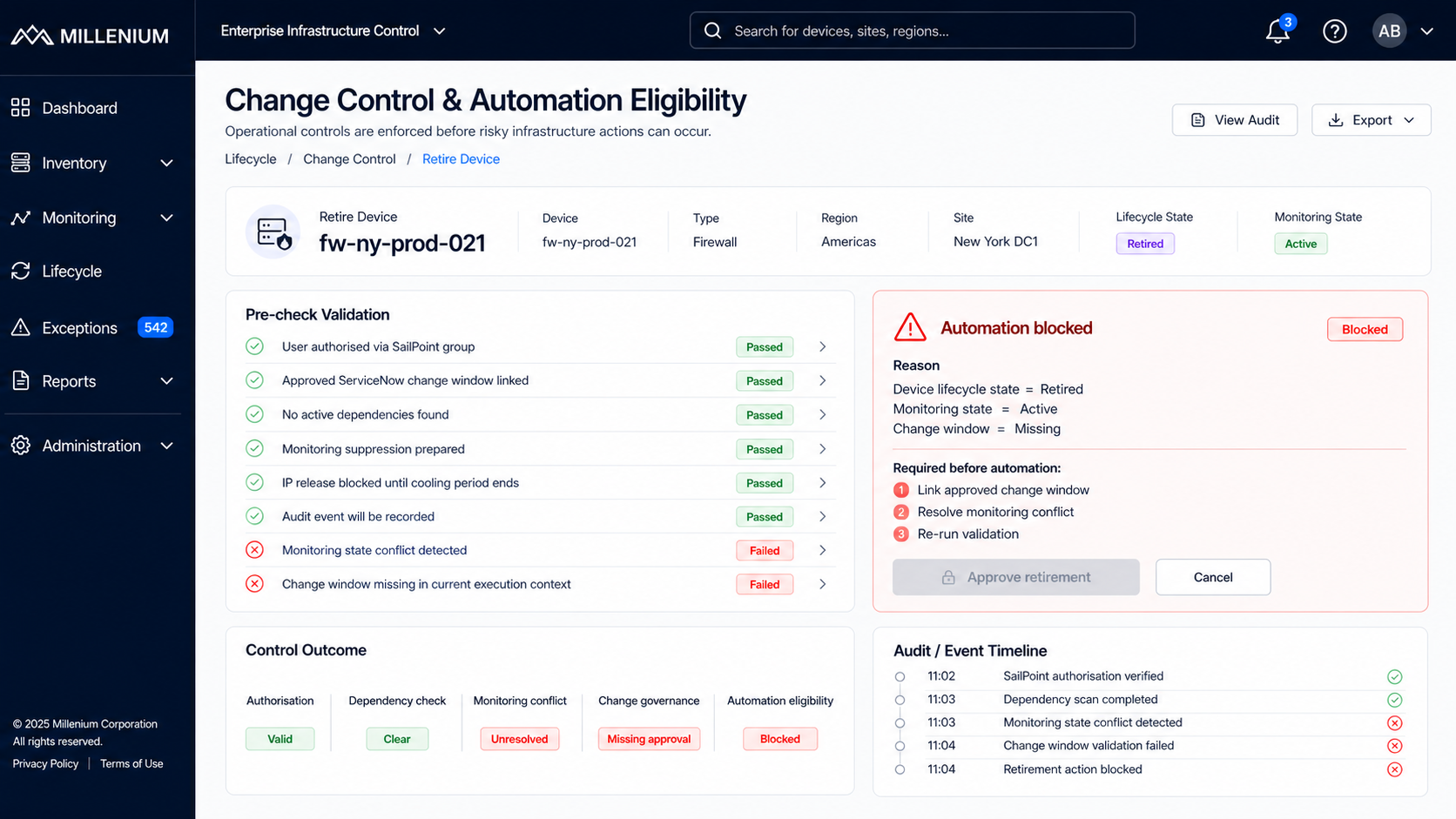
Change controls

Automation eligibility is explained, not assumed.

Passed validations, failed validations, block reasons, and required actions are explicit. Teams can see why something is blocked and what to do about it. No mystery, no tribal knowledge.

Millenium change control and automation eligibility
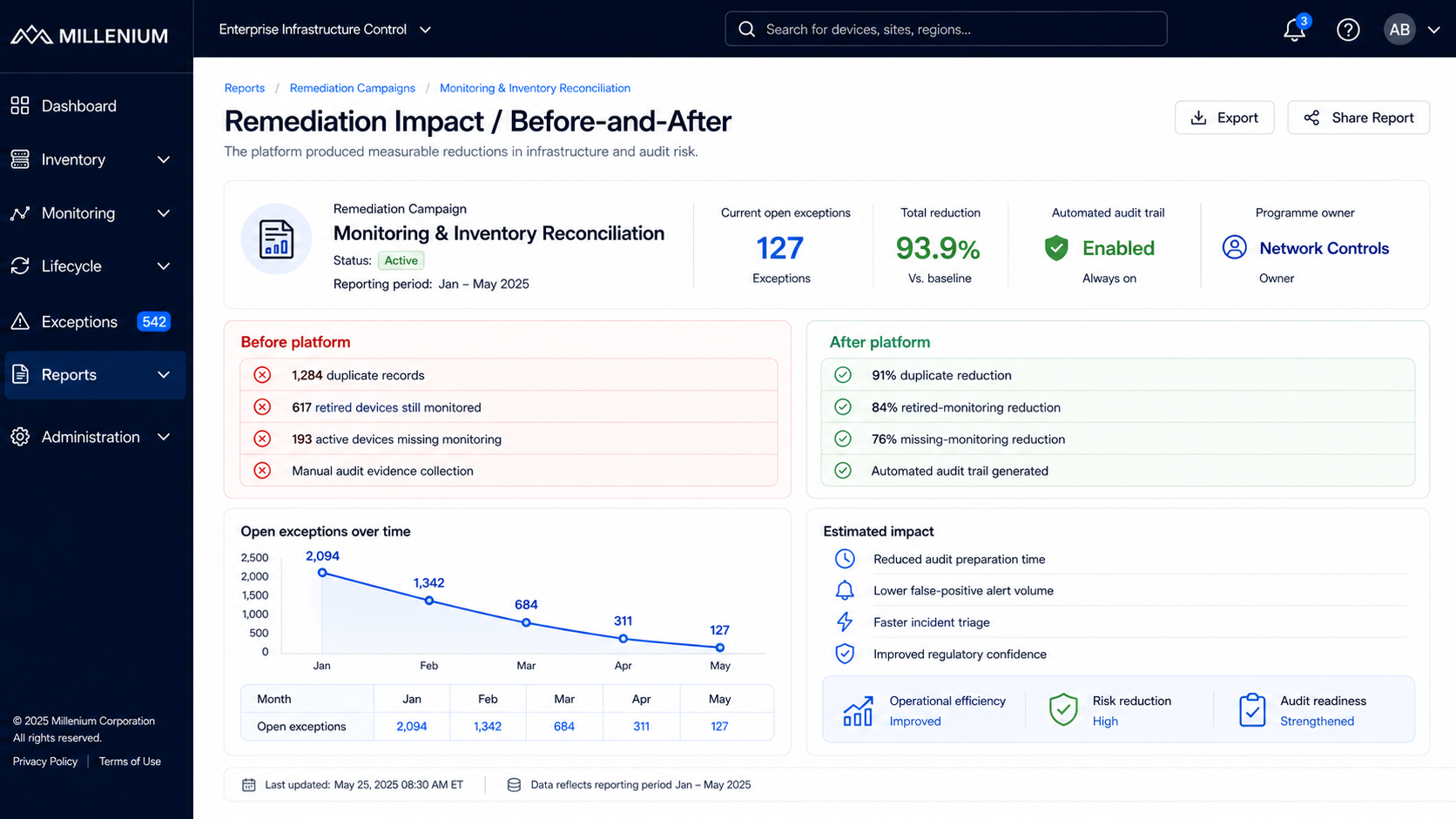
Outcome reporting

Reports framed around impact.

Before-and-after movement, structured for executive review, programme ownership, and audit discussion. I wanted the reports to tell a story — not just dump data.

Millenium remediation impact report
Takeaway

Audit pressure became a reason to build something properly.

Unreliable network inventory controls turned into a production-grade platform — backed by 99.9% uptime, enforceable lifecycle controls, and disaster-recovery readiness. The hardest part wasn't the engineering. It was making complex state legible without oversimplifying what operators actually need.